How to Build AI That Works Beyond the Demo: Lessons from AmaliTech at PyCon 2026
AI can look impressive in a demo. Making it reliable, secure and scalable in production is a different engineering challenge. At PyCon 2026, AmaliTech’s Lloyd Osabutey explored what it takes to build production-ready AI agent systems, from architecture and guardrails to security, scalability and cost.
AmaliTech joined developers, students and technology professionals at PyCon 2026 as an active contributor to Ghana’s technology community, bringing practical perspectives on one of the industry’s most rapidly evolving areas: Artificial Intelligence.
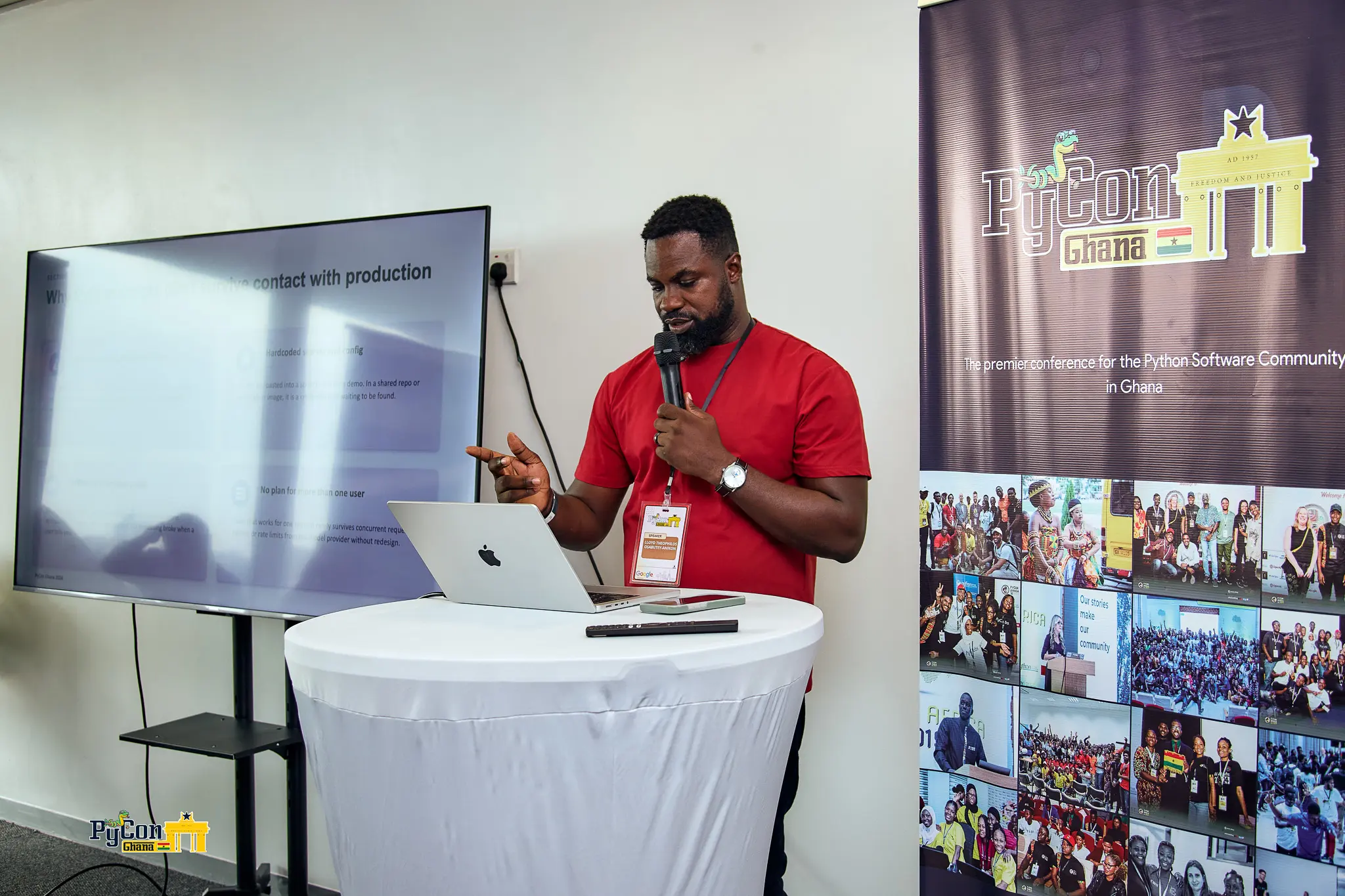
Representing AmaliTech at the conference was Lloyd Theophilus Osabutey-Anikon, Senior Developer and Platform Engineer, who delivered a session titled “Engineering AI Agent Systems with Python on AWS.” His session focused on a challenge that is becoming increasingly important as organisations move beyond experimenting with AI: how do you build AI systems that can operate reliably, securely and efficiently in the real world?
What production-ready AI takes
AI applications can work impressively in a development environment, but moving those systems into production introduces an entirely different set of considerations.
Lloyd highlighted some of the common challenges engineering teams face, including inadequate error handling, limited observability, exposed credentials, and a lack of preparation for concurrent users.
For him, production-ready comes down to four core considerations: reliability, scalability, security, and cost awareness.
The message was clear: building an AI system is not simply about getting it to work. Engineering teams also need to think about what happens when the system encounters an error, serves thousands of users, handles sensitive information, or operates at a significant cost.
These considerations also have direct implications beyond the engineering team. A system that is unreliable affects the user experience. Weak security can expose sensitive information. Poor scalability can limit growth, while uncontrolled AI costs can undermine the commercial case for adoption.
At the same time, Lloyd cautioned against the opposite problem: over-engineering.
Infrastructure should be designed around what an application needs, making it essential for engineers to understand the application and its wider engineering context before deciding how to build its infrastructure.
The goal, therefore, is not to build the most complicated architecture possible. It is to build an architecture that is appropriate for the problem, the users and the scale at which the system needs to operate.
Building AI agents with the right guardrails
The session also examined the growing use of AI agents and the risks that come with giving these systems too much autonomy or access.
As AI agents become capable of performing increasingly complex tasks, organisations need to consider not only what an agent can do, but what it should be allowed to do.
Lloyd highlighted the importance of guardrails and human oversight, particularly in multi-agent environments where different agents may work together on tasks such as code review, deployment, and security. In such systems, one poor decision can potentially cascade through the wider workflow.
This makes responsible AI engineering a practical systems challenge, not simply a question of policy. Organisations need mechanisms that define what AI systems can access, what actions they can take, and where human intervention is required.
He also addressed the cost implications of AI systems, emphasising the importance of well-scoped prompts and thoughtful interaction with AI models rather than relying on multiple small follow-up requests.
To demonstrate how these considerations can come together in practice, Lloyd presented a reference architecture for production AI agent systems built around four layers: an agent layer providing the core reasoning, an interface layer using FastAPI to validate requests and responses, a state layer using LangGraph to manage conversation memory, and a guardrail layer using Open Policy Agent to enforce rules around what an agent can and cannot do.
The architecture illustrates an important shift in how organisations need to think about AI agents. The model itself is only one part of the system. The surrounding layers determine how the agent interacts with users, manages state, operates within defined boundaries and behaves in a production environment.
From experimentation to production
For organisations exploring AI, the distinction between a successful demonstration and a production-ready system is becoming increasingly important. A prototype can show what is possible. Production engineering determines whether that possibility can become something people can depend on.
That means asking different questions: Can the system handle real users? What happens when something fails? How is sensitive information protected? What prevents an AI agent from taking an inappropriate action? And can the system deliver its value at a sustainable cost?
These are the questions that increasingly sit at the intersection of AI innovation and software engineering.
More than a sponsorship
For AmaliTech, PyCon 2026 was about more than having a presence at a tech event. Lloyd’s participation gave the company an opportunity to share practical engineering knowledge with an engaged developer community and demonstrate the depth of its technical expertise.
His session reinforced AmaliTech’s positioning as a technology delivery partner capable of engaging with the realities of building and deploying modern software systems, particularly as organisations explore the opportunities presented by AI.
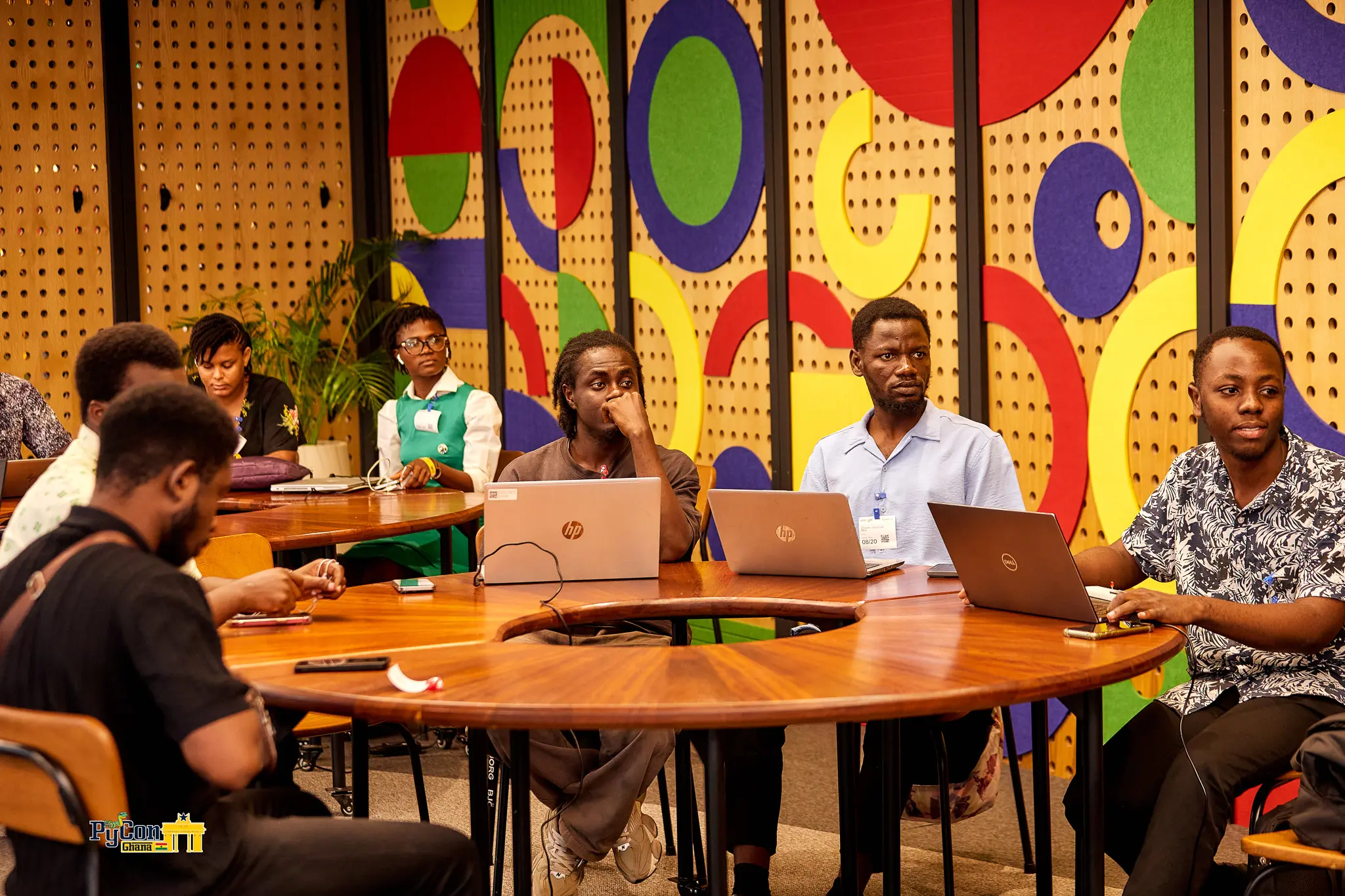
The event also created opportunities for AmaliTech to connect with developers, students and technology professionals across Ghana’s Python community, supporting the company’s broader commitment to contributing to the development of the technology ecosystem.
Across the PyCon programme, conversations also touched on responsible AI and the importance of approaching emerging technologies thoughtfully rather than simply following the latest trend. For AmaliTech, these discussions reinforce a principle that is increasingly relevant to technology adoption: innovation creates the most value when it is grounded in real needs and built to work in the real world.
As AI continues to move from experimentation into everyday business applications, the question is no longer simply what AI can do. It is how organisations can build and deploy these systems reliably, securely, responsibly, and at scale.
Continue Reading
Explore more related stories from our blog, handpicked just for you.
© 2026 amalitech.com | All rights reserved